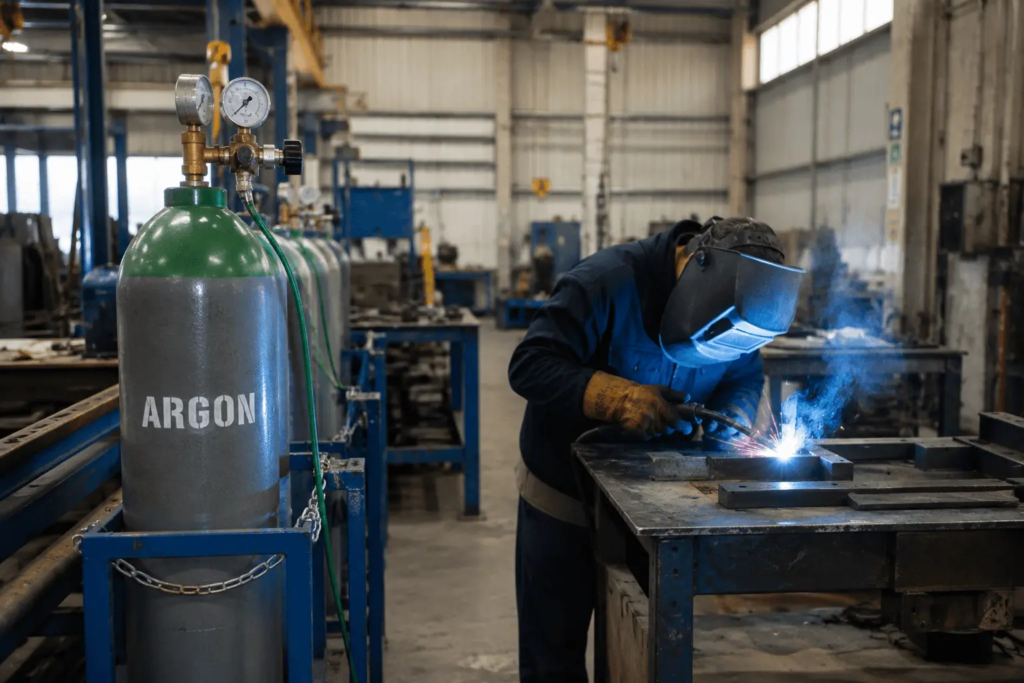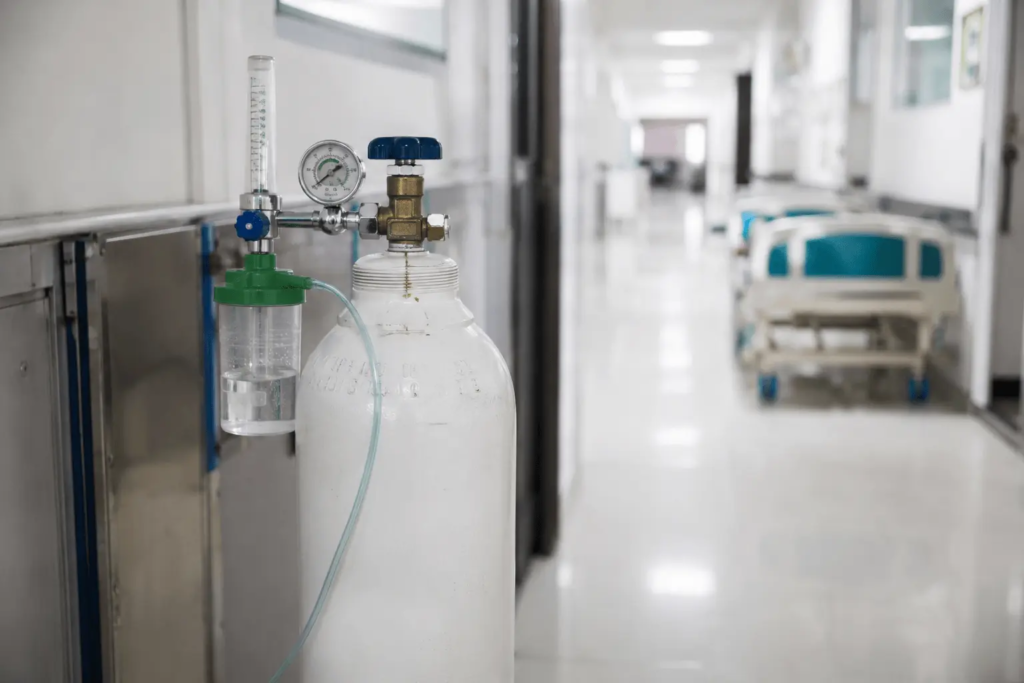
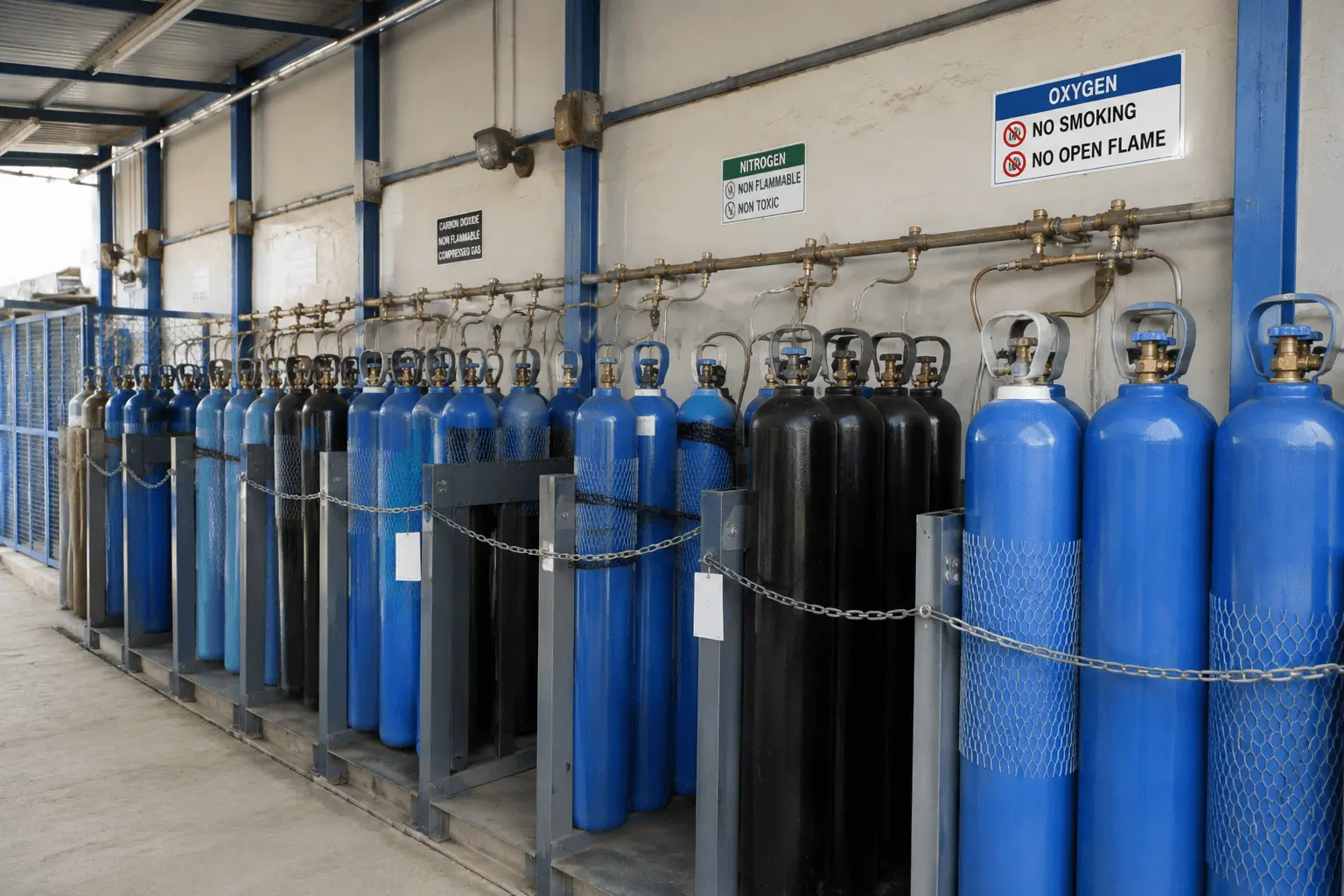
Gas cylinders are essential in hospitals, factories, and workshops — but improper handling can lead to serious accidents. Whether you’re using oxygen, nitrogen, or argon, following the right safety procedures is not optional. Here’s what you need to know.
WHY CYLINDER SAFETY MATTERS
Gas cylinders operate under extremely high pressure. A damaged or improperly stored cylinder can leak, tip over, or in worst cases, become a serious hazard. Understanding the basics of safe handling protects your staff, your equipment, and your facility.
STORAGE RULES YOU MUST FOLLOW
Always store cylinders in a cool, dry, and well-ventilated area away from direct sunlight and heat sources. Keep full and empty cylinders separated and clearly labeled to avoid confusion during use.
Safety Tip:
Always chain or strap cylinders to a wall or fixed support to prevent tipping. Never leave a cylinder standing unsecured.
HANDLING CYLINDERS THE RIGHT WAY
Never drag, roll, or drop cylinders. Always use the proper trolley or cart designed for gas cylinder transport. Remove the regulator and replace the valve cap before moving any cylinder.
Important:
Never use cylinders that show signs of rust, dents, or damaged valves. Contact your supplier immediately for inspection.
MEDICAL VS INDUSTRIAL CYLINDERS
Medical gas cylinders must never be used for industrial purposes and vice versa. They are manufactured, filled, and tested to different standards. Always verify the label, color code, and certification before connecting any cylinder.
REGULAR INSPECTION IS KEY
Cylinders should undergo periodic hydraulic testing to ensure structural integrity. At Beni Suef Factory, all cylinders pass a full inspection process before delivery — giving you complete peace of mind.